Standpoint Theory: This article explains point of view theory, or Standpoint Theory, in a practical way. After reading you will understand the basics of this powerful theory of sociology.
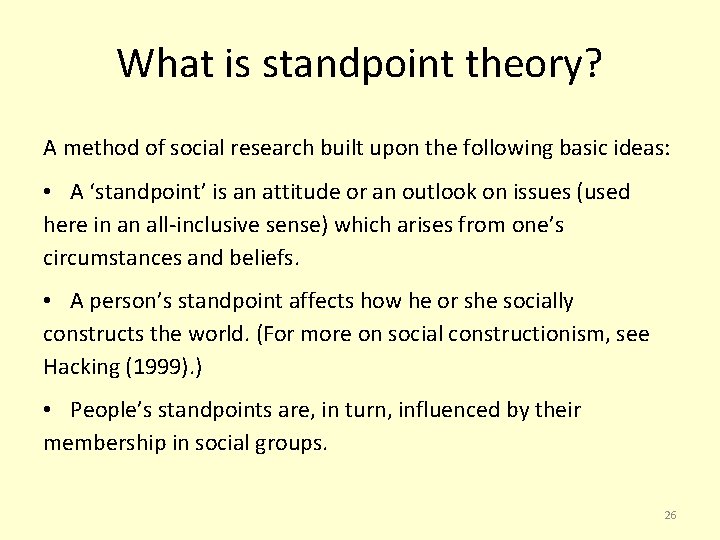
What is point of view theory? The Feminist Standpoint Theory, also known as the feminist point of view theory or point of view epistemology, is a feminist theoretical perspective used in academic disciplines and argues that knowledge arises from social position.
The Standpoint Theory
The theory further states that authority is rooted in perspectives and personal knowledge of individuals and the power that comes from that knowledge.
The most important aspect of point of view theory is that an individual’s perspectives are shaped by his or her social and political experiences. Definition Standpoint Theory The standpoint theory describes a postmodernist perspective on people and knowledge distribution. The perspective denies that traditional science is objective and suggests that traditional research has ignored and marginalized women and feminist mindsets.
The Standpoint Theory stems from the Marxist argument that lower-class people do not have access to the type of knowledge that is accessible to higher-class people, described by Friedrich Engels.
Epistemology Epistemology is the study of knowledge. Professionals who deal with this are called epistemologists. They are engaged in two tasks:
Determining the nature of knowledge Determining the extent of human knowledge
Determining the nature of knowledge means: what does knowledge and knowing actually mean? What determines whether someone knows or does not know something? And what does it mean that someone has more or different knowledge than the other? These questions are about understanding knowledge.
Determining the extent of knowledge is an important secondary task for epistemologists. In order to determine this, they are concerned with the question of how much people know or could know.
How can the human mind, senses and resources be used to acquire knowledge? What boundaries are incorporating…
Core Quadrant: This article explains Daniel Ofman ‘s core quadrant theory in a practical way. After reading you will understand the basics of this powerful and effective communication tool and you can get started with your core qualities.
Background core quadrant theory
Everyone can be annoyed by the behavior of others. We find others, such as certain colleagues, to be difficult and believe that someone should do their best to change their behaviour. But do “difficult” people really exist?
According to business expert Daniel Ofman , the answer is no! Does each person possess certain core qualities that can differ enormously from each other? According to Ofman, the answer is yes!
A big difference in this can cause certain friction between people. Ofman explains this principle in his book Inspiration and Quality in Organizations
What is a core quadrant
To gain more insight into these mutual relationships, Daniel Ofman developed various core quadrants that clarify why this friction arises in combination with which behaviour.
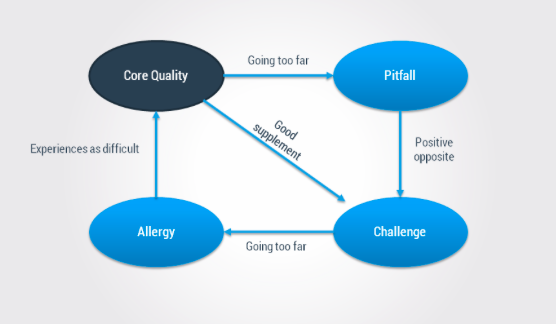
The model revolves around the four terms core quality, pitfall, challenge and allergy. These are qualities that a person can control and improve in the context of personal development and personal leadership.
A person’s core quality can be in direct opposition to the behavior to which he or she is allergic. Daniel Ofman then indicates how a core quality can turn into a pitfall and how he can take up the challenge to adjust his behaviour.
Core Quadrant Examples
The core quality is one’s natural positive quality, which is not learned. However, this strength of the personality can overshoot, turning the strength into a weakness. Every person has some of these core qualities. Example: punctual and tidy.
Pitfall
In the case of shooting, Daniel Ofman speaks of a pitfall, in which the property has a negative effect on the environment and also gets in the way of the person himself. Example: Perfectionist and over organized.
Every core quality has a sunny and a dark side. The shadow side could also be called distortion. The distortion is not the opposite of a core quality, but rather a core quality that goes too far and misses the mark.
For example, flexibility can turn into fickleness. When this is the case, flexibility suddenly becomes a weakness. In short, a pitfall can be described as too much of a good thing.
The pitfall is noticed before a core quality. Someone who is decisive can quickly be noticed as pushy.
Regardless of whether this is justified in some situations, this is simply part of the core qualities of this person. Core qualities and pitfalls are inextricably linked. It is important to ensure that the pitfalls do not occur too often.
Challenge
The positive opposite of the pitfall is the challenge, which is a good addition to the core quality. The challenge creates more balance. example: let the “things go” more often and learn to postpone.
The challenge is, as it were, a second gift in addition to owning the quality. The positive opposite of being pushy is being patient or reserved. Pitfalls and challenges are complementary processes.
It is about achieving a good balance between flexibility and consistency. If the balance tends too far towards flexibility, there is a chance that flexibility will turn into capriciousness.
In order not to fall into the trap, it is necessary to accept the challenge. A person who can analyze well should beware of the trap of indecision.
Allergy
The allergy is diametrically opposed to the core quality. When someone goes too far in his challenge that is linked to the core quality, there is a danger that the trait will degenerate into an allergy (extended form of someone’s challenge). Example: untidy and disorganized. In such a case Ofman speaks of an allergy.
A person’s pitfall is often the source of irritations or conflicts/tensions. This is especially if one person’s pitfall turns out to be someone else’s allergy as well.
The average person turns out to be allergic to the opposite of the core qualities. An allergy is therefore a character trait that someone with a certain core quality experiences as difficult.
An energetic person will tend not to handle passivity well; he or she is allergic to passivity. The more often someone is confronted with his own allergy by someone else, the greater the chance that he or she will end up in the trap.
A decisive person runs the risk of being pushy while accusing someone else of being passive. According to Daniel Ofman, you can learn a lot about yourself when you are annoyed by certain people.
With the formulation of the allergy, Daniel Ofman’s Core Quadrant is complete. In the quadrant, the connection between qualities, pitfalls, challenges and allergies quickly becomes clear.
The difference between qualities and skills
In the hiring process of many companies, terms such as qualities and skills are common. These two are often confused, but are fundamentally different.
Core qualities, as expressed with Ofman’s Core Quadrants, are characteristics that belong to the essence or core of a person.
They are personal. Personal qualities are the powers or strengths that people think of when they hear a certain name. Examples of core qualities are orderly, decisive, caring, diligent and more.
Core qualities are not behaviours, but rather possibilities to which one can be tuned. The same goes for broadcasting a live stream. The live stream is of good quality if there is a stable network connection in combination with properly working equipment. People also have qualities that can be tested.
Everyone is born with some core qualities, but that’s not all. Everyone is also born with a number of pitfalls, a challenge and an allergy.
The difference between qualities and skills is mainly made up of the fact that qualities come from within and skills are learned: nature vs. nurture. The clearer the image a person has of his own core qualities, the more consciously the qualities can be used and also which qualities.
Those who have strong perseverance know that they will function well in situations where the time span is stretched. They also know that persistence comes in handy in their lives, both professionally and privately.
Create Core Quadrant
Many people are allergic to the behavior of others for fear that this behavior is also hidden somewhere deep within themselves.
Besides that Daniel Ofman’s core quadrant provides insight into the actions of others, it also provides insight into one’s own actions. By applying the model, there is more understanding for each other and for different situations.
Ofman’s model can be applied personally or to groups / others. The core quadrant structures information about yourself and other people. It is important to fill in your own quadrant before using the method for or with someone else.
Always focus on the positive qualities (core qualities) of the other persons. This is a precondition for understanding, possible change and awareness. The application of the core quadrant creates more empathy for each other in different situations.
Keep in mind that some people fill out the personal quadrant based on how they want people to see them. There is therefore a risk of incorrect terms being used.
Always use nouns to describe the qualities of yourself and others, such as: perseverance, kindness, etc., and not pushy or obnoxious.
The core quadrant for insight into core qualities
By understanding personal different core qualities and pitfalls, it is also better to understand that a pitfall can be perceived by someone else as an allergy.
With self-insight, one discovers that a core quality sometimes goes too far, which can cause irritation in the environment. Below you will find a number of examples of core qualities and pitfalls:
Employees who can use their core qualities in the workplace are more involved, are less likely to leave, perform better and will benefit the company’s results. The best way for organizations to leverage employee strengths is through the managers.
The above facts come from a large Gallup study of human behavior and strengths. Employees who can leverage their strengths every day are six times more likely to be engaged in the work they do.
The research uncovers a compelling link between strengths and employee engagement in the workplace. This relationship has the potential to accelerate performance as organizations work to improve on both factors.
How do I develop my core qualities?
In addition to identifying and discovering core qualities, developing them is also very important.
The best way for people to grow and develop is to identify how they are naturally put together: how they think, feel and behave and what their talents are. They then build on those talents to develop strengths, or the ability to consistently deliver perfect performance.
The same Gallup research shows that building and developing employee strengths is far more effective at improving performance than at improving weaknesses.
As mentioned, the best way to do this is through the managers in the workplace. But in practice a lot goes wrong here.
A quarter of all American workers say their core skills are ignored in the workplace. Forty percent of that share indicates that they are even discouraged from using their qualities.
Focusing on employee strengths by a manager has a profound effect on employee engagement.
That’s because managers play an important role in maximizing the realization of these employees’ potential. It is the managers who can enable employees to capitalize on their strengths.
Tips for deploying the core qualities of employees
Below are some tips for effectively assessing, deploying and developing the strengths of employees.
Don’t assume that everyone knows their own strengths. Many people often take their greatest talents for granted or are not fully aware of their talent. Gallup ‘s Clifton Strengthfinder can be used to identify strengths.
Find creative ways to apply strengths in ongoing projects to achieve common goals. Help employees get to know each other’s strengths and understand how they can complement each other.
Use meetings to help team members identify each other’s strengths.
Integrate the strengths of employees in the appraisal interviews, and help them set goals based on these strengths.
Summary core quadrant theory of Daniel Ofman
Daniel Ofman’s core quadrant theory is a valuable method to gain insight into the mutual relationships of people / employees. Mapping this out helps them in their personal development.
Specifically, it concerns employee behavior to which other employees are allergic. With difficult or deviant behavior people assume that the person is difficult himself. However, in fact, these behaviors more often stem from the pitfall of a certain core quality.
The model consists of several parts. The first is the core quality itself. This is a natural positive characteristic of someone. This can turn into a negative trait. This is called the pitfall of the natural core quality.
Every quality has such a dark side, but this is not always noticed. An example of this is flexibility turning into fickleness.
The challenge is the positive opposite of the pitfall. The challenge creates more balance between the dangers and forces of strong properties.
In the example of flexibility, the challenge creates a good balance between consistency and flexibility. If the balance threatens to move too far towards flexibility, there is a chance that flexibility will turn into capriciousness.
The last part of the model is the allergy. The allergy is diametrically opposed to the core quality. An example of this is passivity vs. proactive. A proactive person is likely to be allergic to passivity. A proactive person, in turn, can also be described as decisive and pushy when he tells others to be passive.
What do you think? Do you recognize the core qualities and the core quadrant in which behavior becomes visible? What is your experience, your challenge, your core quadrant and do you have any additions to the above? What do you think are success factors that can contribute to coping with certain behaviors to achieve goals?
Share your knowledge and experience via the comment box at the bottom of this article.
Kolb Learning Styles: This article explains in a practical way David Kolb ‘s Kolb Learning Styles . After reading you will understand the basics of this powerful management tool .
What are Kolb’s learning styles?
The American psychologist David Kolb , together with Roger Fry, developed a model for an effective learning process in the 1970s. This management model, the Experiential Learning Model (ELM), is cyclical and is also known in science as Kolb’s four learning styles.
Through Kolb’s four learning styles, which is also a learning circle, it becomes clear that there is not just one way of learning, but that there are several methods and that each individual has his own preferred learning style.
Diversity
David Kolb discovered that people tend to develop mainly the learning phase in which they are strong. According to him, it is good to also pay attention to ways of learning in which one is less good.
Such diversity allows the learning cycle to be completed in a more complete and balanced way, with each phase receiving equal attention.
A group has this diversity by nature, so that the group members complement each other automatically. Thus David Kolb came to understand Kolb’s four learning styles.
Dimensions
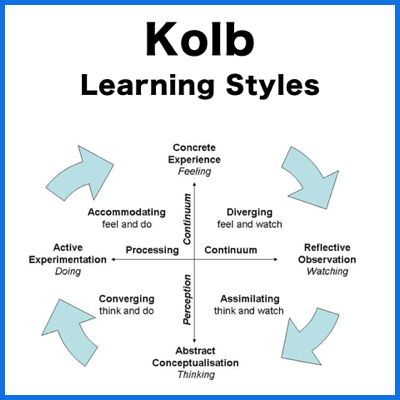
David Kolb distinguishes in his four learning styles model two dimensions with the opposites “Concrete versus Abstract” and “Active versus Reflective”.
In practice, it appears that adults (unlike children) depending on experience and stage of life, first have to unlearn something before they can learn something new. Sometimes (undesirable) experiences have to be processed before they are open to new insights.
What are Kolb’s four learning styles?
Within the dimensions, Kolb’s four learning styles are based on a theoretical model of four key steps. David Kolb distinguishes the behaviors and the corresponding learning styles:
Kolb .’s Learning Styles
Kolb Learning Styles: This article explains in a practical way David Kolb ‘s Kolb Learning Styles . After reading you will understand the basics of this powerful management tool .
What are Kolb’s learning styles?
The American psychologist David Kolb , together with Roger Fry, developed a model for an effective learning process in the 1970s. This management model, the Experiential Learning Model (ELM), is cyclical and is also known in science as Kolb’s four learning styles.
Through Kolb’s four learning styles, which is also a learning circle, it becomes clear that there is not just one way of learning, but that there are several methods and that each individual has his own preferred learning style.
Diversity
David Kolb discovered that people tend to develop mainly the learning phase in which they are strong. According to him, it is good to also pay attention to ways of learning in which one is less good.
Such diversity allows the learning cycle to be completed in a more complete and balanced way, with each phase receiving equal attention.
A group has this diversity by nature, so that the group members complement each other automatically. Thus David Kolb came to understand Kolb’s four learning styles.
Dimensions
David Kolb distinguishes in his four learning styles model two dimensions with the opposites “Concrete versus Abstract” and “Active versus Reflective”.
In practice, it appears that adults (unlike children) depending on experience and stage of life, first have to unlearn something before they can learn something new. Sometimes (undesirable) experiences have to be processed before they are open to new insights.
What are Kolb’s four learning styles?
Within the dimensions, Kolb’s four learning styles are based on a theoretical model of four key steps. David Kolb distinguishes the behaviors and the corresponding learning styles:
Doer
This learning style shows a combination of active experimentation and concrete experience.
Doers prefer situations where they can get started as quickly as possible and learn best when there is room for direct experience by doing things.
Doers are open to new learning opportunities, are good at solving problems and find it a challenge to start on an unknown job.
Viewer
This learning style has a preference for concrete experience and reflective observation. Spectators like to think things through first and are champions of lateral problem solving.
They like to approach and look at a problem from all sides and see new entrances and solutions all the time. Spectators don’t want to be rushed and want to have time before making a decision.
Thinker
This learning style combines reflective observation with abstract conceptualization. Thinkers like to convert their observations into hypotheses and theories. They can reason well and like to work independently.
They learn best from structured situations with clear objectives, theories and models. They would like to have the opportunity to ask questions and discuss.
Decision maker
This learning style favors abstract conceptualization and active experimentation. Decision makers like to try theories in practice.
They often take initiative, are problem-solving and make decisions. They learn best from clearly and concisely formulated rules and principles, which they can apply right away. They are practitioners who don’t like wasting time.
Kolb’s learning styles are cyclical
Kolb’s learning styles is a cyclical process, in which all four stages of learning must be completed. This does not have to be done from the same starting point, but preferably in the same order.
Despite preference for a certain phase, according to David Kolb, the learning process becomes easier by going through all four learning phases.
Coherence
Until recently, in many study programs the emphasis was mainly on the assimilating learning style; reflection and theory building. They learned how certain things are related and how they can be seen in a theoretical framework.
Less attention was often paid to the accommodative learning style (experimentation and experience). By doing something, one gains experience (doer). Then one looks back at what exactly happened (the viewer).
After that, connections are made between these reflections and observations and a certain theory (thinker) is formed. Then people think about how something can be (even) better and will try it out in practice (decision maker). All-round learners master all four learning styles.
Develop yourself with Kolb’s learning styles
Personal development according to your own learning style
Many companies also suffer from the ‘one-size-fits-all syndrome’ in which copying behavior predominates and one employee can hardly be distinguished from another.
The result is clear: a lack of dynamism within the company. Every person is unique and goes through their own personal development.
That is why not only schools, but also organizations should focus much more on a personal learning style that ensures that every individual gets the best out of himself.
Learn in your own style
Get a group of people together and have them learn the same subject or skill. You will notice that everyone does this in their own way. Learning cannot be captured in one style.
Learning psychologist and educator David Kolb made a distinction between different learning styles and personalities.
David Kolb was based on doers, thinkers, dreamers and decision makers. They all go through different phases during the learning circle: concrete experience, observation and reflection, analysis and abstract thinking and active experimentation.
Personal development
Depending on the type of personality, someone steps into the learning circle.
Doers like to tackle. Give them some concrete instructions and they will get to work right away. Active experimentation is their credo. You can solve problems by trying things out.
Thinkers first choose to collect information. They link new knowledge to what they already know. Thinkers only get to work when they understand what they are doing.
Dreamers don’t like quick decisions. They take their time and like to look at things from different angles. As a result, they often see different solutions that are all worth considering.
Decision-makers take a pragmatic approach. They like to make a step-by-step plan and then try things out. They are more practical and not so interested in theory.
Taking advantage of Kolb’s learning styles
It is a lot easier for trainers when they have an idea whether the trainee is a doer, thinker, dreamer or decision maker. This allows them to develop person-oriented learning material.
You have to convince the decision maker of its practical usefulness. The thinker benefits most from an intellectual challenge. You do the doer a favor by stimulating him with a practical assignment.
The dreamer gets excited when confronted with different visions to solve a problem.
When employees can learn in a style that suits their own personality, they will be more motivated and achieve better results. Learning something new does not happen in a forced way, but, as it were, automatically.
ADKAR model: This article explains Jeff Hiatt ‘s ADKAR model in a practical way. After reading you will understand the fundamentals of this powerful change management tool.
What is the ADKAR model?
Change in organizations usually provokes resistance among employees. The ADKAR model offers a solution to identify why changes are difficult to achieve and do not always work well.
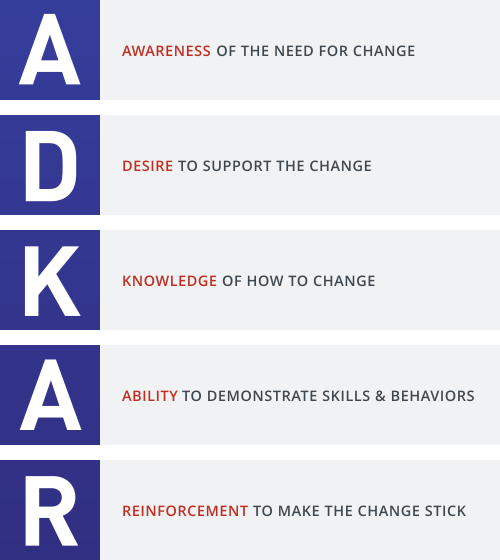
Change management is successfully achieved on the basis of five elements, which together form the acronym ADKAR. The letters stand for Awareness, Desire, Knowledge, Ability and Reinforcement .
This model was developed by Jeff Hiatt in 2006 and was introduced into practice by Prosci , a recognized change management consultancy and training firm.
The ADKAR model is primarily intended as a coaching tool to help and assist employees during change processes within organizations.
Awareness
All five elements of this model can be applied sequentially as well as stacked. When changing, it is important that everyone is aware of the reason.
Employees naturally resist when it comes to change. It is therefore necessary to make them aware of the need for change.
Good and extensive knowledge is a precondition for implementing the change. Learning new skills and managing different behavior is part of this.
After implementation, it is necessary that the change is reinforced in order to prevent relapse to old behavior.
The five building blocks of the ADKAR model
In the model, five building blocks serve as a basis for successful change management:
Consciousness (Awareness)
Employees must become aware of the necessity of the change.
The first building block revolves around possibly the most important question: why is change necessary and desired? Without a clear answer to this question including motivation, staff will have great difficulty accepting the change and joining the movement.
Effectively communicating these reasons, from different perspectives, is necessary to create awareness. Preferably, the communication consists of practical examples about why employees will find the planned initiatives useful and why it will benefit their work.
An important method of achieving this is by opening an open dialogue between employees and management. It is important to make them think about the change, ask questions and share their own experiences and examples.
It is also possible to conduct interviews with customers or employees in which they explain their perspectives and make a plea for the change. These interviews can be filmed and shown to larger groups of employees.
Desire
Employees must be given the desire to participate in the change and fully support it.
The second building block revolves around motivating employees. Companies can’t tell their employees how they should feel about something, but they can motivate them. There are a number of specific reasons why people feel resistance to change. For example, studies show that some employees can embrace change if they feel heard and treated well throughout the change process.
A common mistake is therefore to invite employees for a dialogue about change and then not organize anything anymore. In many cases, employees find it useless to write down ideas on paper that they don’t hear about later.
It is therefore essential to organize regular communication and feedback moments. In this way involvement is stimulated, which helps to accept change.
Realization (Knowledge)
Knowledge of the change process makes it clear to employees what the (end) goal of the change is.
Learning does not happen in a closed space. Whatever knowledge employees have, it is important that they share knowledge and reflect knowledge in an organized learning process. In this way they give meaning to what has been learned and help each other to benefit from newly acquired knowledge.
This is also known as social learning. Social learning is the key to spreading knowledge in a natural way. Organizations should not just send their employees on a course, but should actively let them deal with new knowledge.
Power (Ability)
The ability to learn new skills and manage different behavior makes the change more acceptable.
What prevents employees from contributing to change? Sometimes it is because they feel they are not part of the change. By listening to employees, companies can identify and remove barriers. Ask them how things are going and how they experience their position.
Encourage people to believe in their own abilities and give them recognition. Even when they fail, because then it is more likely that they will learn from their mistakes. It’s hard for employees to show their weaknesses in the workplace, so remind them not to be ashamed of seeking help.
Reinforcement
By ratifying the change, it is clear to all employees that there is no going back.
To support the change, an organization must encourage employees and managers to keep talking about the progress of the initiatives, celebrate milestones and continue to share success stories. Provide employees with a platform to easily share stories.
ADKAR model : two dimensions
Every change takes place on two dimensions; the organization and the employees. Change is only successful when change takes place on both dimensions simultaneously.
If it appears that stagnation is taking place in the model at one of the building blocks, it is good to take action very specifically on this element. This goal-oriented approach focuses on that element with the highest chance of success.
The model not only helps to determine in advance which steps must be taken to achieve the right goal, but also to identify afterwards why changes do not work well. This evaluation moment is especially valuable in order to make the change successful.
Advantages of the ADKAR model
There are many benefits associated with using the ADKAR model. Some of these benefits are listed below.
The ADKAR model offers a practical and simple approach to change management. Many change models only prescribe change in group dynamics or organizational change, but are difficult to apply.
ADKAR is an out-of-the-box approach, but it doesn’t require companies to reinvent the wheel. It is a turnkey solution for companies that want change.
ADKAR has been around for a long time and has been extensively tested. It is one of the most widely used and popular change management models.
ADKAR comes with a lot of explanation, training and support. The company behind ADKAR, Prosci, offers good and comprehensive training for reasonable prices.
Disadvantages of the ADKAR model
Obviously, there are also some drawbacks associated with using the ADKAR model.
The ADKAR model ignores the need for companies to develop a vision for the long-term development of their change plans.
The ADKAR model is better suited for smaller change proposals because it focuses only on the human aspect of change. This is not enough to achieve large-scale change.
Now it’s your turn
What do you think? How do you apply the ADKAR model? Do you recognize the building blocks for a good elaboration of the ADKAR model or are there more / others? What do you think are other success criteria or factors that can contribute to the application of the ADKAR model?
Share your knowledge and experience via the comment box at the bottom of this article.
The pandemic and all the restrictions that come with it have ensured that technological developments follow each other much faster over the past two years. Two years ago, few people could have predicted that it would be possible for everyone to work from home, that there would be online education, and that even a doctor’s appointment from home would be possible.
However, we can expect many more of these kinds of developments this year and in the years to come. In addition, the importance of sustainability and inclusivity in technology is also becoming increasingly important. Cisco has identified four trends that we will see more and more in the coming years, where sustainability, inclusiveness and innovation are becoming increasingly important.
1. Data flows lead to predictive insights
Modern companies are defined by the business applications they create and use. The pandemic has emphasized and magnified the importance of these business applications, and their use has grown significantly. Due to this increase in online interactions, more and more data is being collected. Every interaction on business platforms and applications adds data to an ever-growing data stream. From this data, predictive insights or predictive insights are generated. In some cases, the data from these predictions will be centrally stored (in the Cloud), but in other cases data will first have to be processed in the Edge, closer to the user, for example Machine Learning and other capabilities.
2. Ethical AI is a prerequisite for an inclusive future
But how do we gain these predictive insights? And how can we understand this data flow? The extremely large amount of data that is collected is too large for this processing to be done by humans, but the data must be processed intelligently and sometimes even in real-time. This is done by Machine Learning (ML) and Artificial Intelligence (AI). However, processing data through ML and AI to produce insights also poses privacy, ownership, sovereignty and compliance challenges. In addition, AI must be free of prejudice, thus guaranteeing inclusivity. AI must therefore be ethical, responsible and understandable so that everyone using the system can understand how insights are produced and why the data leads to these outcomes.
3. Reliable, safe and cheap internet everywhere is the step towards less inequality
The urge for unlimited connectivity and communication will continue to exist in the future. The Internet helps us reduce social and economic inequalities by providing everyone with equal, fair access to the modern global economy. In particular, this will reduce the difference between urban and non-urban areas and will create more jobs for everyone, regardless of where they come from. A permanent and reliable internet connection, available at a low price, is crucial. Using AI, we can better predict connectivity and connectivity issues and correct these issues faster, improving connectivity. In this way we will realize a seamless connection between any mobile and Wi-Fi connection, in the future even via LEO satellites.
4. Are quantum computers and security the way to a crime-free internet?
Quantum computers and security will work together in a different way than the classical communication networks we have at our disposal today. Our current networks stream bits and bytes to exchange data. Quantum technology, on the other hand, is fundamentally based on an inexplicable phenomenon in quantum physics – the entanglement of particles that allows them to share information. Quantum networks can provide a new secure connection between digital devices, making them impenetrable to hackers. For example, systems are better protected against fraud and other interruptions to online activity. A crime-free internet is a wonderful perspective!
“As you are, so is your home. And as your home is, so are you,” the Chinese say. That can be quite confronting when you stumble over piles of papers, clothing lying around, bulging bookcases and dusty trinkets. What does that say about you? In this article you will find the meaning of Feng Shui and tips and rules to make your house Feng Shui-proof so that the life energy can flow optimally.
A home is not just a place with four walls and a roof, but the ultimate place to express your identity. However, the reverse is also true: it is also the most important factor that influences your well-being, your happiness and the lightness with which you live. Your house and the things you have collected in it say a lot about who you are and where you are in your life. And also how you treat yourself. If there is a lot of disorder in your house, it creates chaotic chi. That chaotic chi in turn creates disorder, chaos and confusion in yourself and in your life. The more stuff, the greater the chance that you experience your life as unnecessarily heavy. Feng Shui helps you to let the life energy flow in your home.
Minimize for a lighter life
That does not mean that Feng Shui pursues a minimalist lifestyle. In contrast. Because we feel richer and more fulfilled when we are surrounded by things that are carefully made of beautiful materials. Objects that evoke a loving memory and are dear to us make us happy. They help us determine our identity. In a very minimalistic interior, there is no healthy emotional frame of reference. That can have a negative effect on your awareness of yourself.
Objects that stand in the way or are broken or worn out, by the way, constantly send out negative signals and take away the space to live in freedom. Because every time you see them, they unconsciously trigger a negative emotion. This puts an unnecessary burden on your life. It is therefore better to ban them from your home and from your life.
A healthy Chi
For a healthy energy in the house, Feng Shui advises to leave room to move. So that the chi, the life energy, can cheerfully and unhindered provide your whole house and thus your whole life with new zest for life . This way you not only keep your house, but also your body and life in a healthy condition.
8 tips and rules from Feng Shui for space in your home and a lighter life
1. Your home is your personal kingdom
Do you make your own conscious choices about how you handle your home? Who lets you in; what items come into your house; where you put them. Or do you blindly follow trends, advice from others or the opinion of your partner? When you become aware of the control you have over your own domain, you are more powerful and independent in life. Honoring your home as the personal kingdom it is makes it easier for you to see yourself as the queen or king in control.
2. Be selective
Because we find it difficult to say goodbye to a certain period in life; of the person we were; or from the one we have shared life with, we make excuses to delay decisions. This way you can tell yourself that you might still be able to use that old blanket for something, but the real reason you don’t get rid of it is that it reminds you of your deceased cat who always slept on it.
Well-known excuses:
‘I’m going to make it soon’
‘I’m saving it for my kids’
‘Maybe it will be worth a lot’
‘It’s going to be fashion again’
‘Maybe I still need it’
In doing so, you burden your life with baggage that belongs to someone else or to another time and that does not make a valuable qualitative contribution to your life. By being more aware of this, you create space for your own form of lighter life.
3. Choose quality
Rather buy a single item that is carefully made of beautiful materials. And from which you also know where it comes from, instead of a cheap mass product of poor quality. Such products devalue the energy in your home and thereby devalue yourself.
4. Discover a deep wish
As long as you don’t know what you’re doing it for, cleaning up remains something that “should” and not something you are motivated to do from within.
If your study is clutter-free, there would finally be room for your long-cherished desire to paint. Research into yourself what you dream of doing or experiencing. The more concrete and clearer your wish, the greater your motivation to make room for that wish and to improve the quality of the furnishing of, for example, your office.
5. Honor That Makes Happy
When it comes down to it, the things that really make you happy can be counted on the fingers of one hand. More stuff does not mean more happiness: you will find that much more in the small things. The softness of a wool sweater. The shine of a wooden table. The way the sun’s rays draw patterns on your wall. That one picture of your baby. If you honor what makes you happy, you lose much less attention to things that don’t deserve it. Give that one photo a place of honor and don’t hide it between a multitude of images.
6. Create regularity and rituals
Neglect makes dull and indifferent. It also draws life force from a space or object. Therefore, choose fixed times to tidy up and clean. Welcome the light into your home when you open the curtains. And thank your house when you close them again. Regularly incorporating moments for care and attention for your home will quickly raise the frequency of the energy in your home. Even a small ritual like greeting your home every time you come back in quickly improves your relationship with your home. Your house thus changes from utensil to a sacred place.
7. Cleanse the room and reward yourself
When you’re done cleaning up and organizing a space, it’s always good to refresh the energy in that space. Open windows and doors against each other and let the air blow through, and wipe everything with soapy water. Cleaning on a deeper level is done with the help of good quality incense or sounds of healing music. The crowning glory can be a beautiful, fresh bunch of flowers.
Don’t forget to reward yourself after a clean-up hour with a nice cup of tea, a walk in the woods or something else that makes you happy. Set a time limit ranging from 15 minutes to an hour, then stop cleaning up, and celebrate the victory over yourself. Take a deep breath and admire the result achieved – even if it’s just one drawer. This gives energy and courage to tackle the next job.
8. Make life force visible
Often a house is full of things that are not alive, that have not been brought to life. Beautiful, green plants or pets remind us with their presence that we are living beings and like to be surrounded by life and vitality. This not only makes a positive contribution to the quality of energy, but keeps your consciousness much more in the here and now. More grounded.
A new era is dawning, in which hybrid working is even more central and connection is more important than ever. Zoom therefore worked hard on new solutions to support everyone not only in working from home, but also in helping to keep looking for the connection. That will remain the mission in 2022.
From offering a unique customer experience to bringing physically separate teams together, Zoom will introduce new features in their services over the course of 2022 to facilitate collaboration and gathering with friends, family, colleagues and customers. “We are constantly innovating to make our platform easier, more intuitive and more secure,” said Frank aan de Stegge , International Partner Marketing Manager at Zoom. “These new features are a perfect example of this. I’m confident they will make our customers happy!”
Below is a selection of these features that Zoom will release in 2022:
Video Engagement Center. The Video Engagement Center is built with the same cloud-first scalability and familiar video architecture that Zoom users have come to expect. It is an intuitive, cloud-based solution that allows you to connect experts and customers via video and provide unique customer experiences, whether they are in a physical store or want to communicate with each other online via apps and websites, for example.
Huddle View Bring physically separated teams together in a digital space with Huddle View. This feature provides a visualization of where participants are located for each channel, so that teams can get a better sense of togetherness as they chat and collaborate.
Zoom Events Backstage Virtualize your ‘performer foyer’ with this backstage feature, which provides speakers, panelists and production assistants a collaborative space from which to respond to questions and answers, monitor chats and join discussions before going live themselves .
Zoom Whiteboard Thanks to the brand new Zoom Whiteboard, , both on-site and remote participants can collaborate in real-time on a digital whiteboard – even without a meeting! The new Zoom Whiteboard works everywhere: on laptops, in conference rooms, on mobile devices or on Zoom for Home devices
Zoom Widget To help you connect with teams and make workflows more efficient, the Zoom Widget has been developed. This gives you an overview of your meeting agenda at a glance, you can see who is already in a meeting, you can quickly send a chat message, and more.
Zoom Apps for Mobile and Webinar In 2021, Zoom Apps was introduced in the desktop client. Now they are also available in the mobile app and Zoom Video Webinars. Take your favorite workspace applications to webinars or meetings on your mobile device, or connect with others through interactive games and other apps. You can also expect Immersive Apps, with which you can customize Zoom’s Immersive Views for both yourself and all participants!
Improved translations and transcriptions Part of this year’s schedule is to extend Zoom’s auto-generated closed captioning to support multiple languages and add live translation.
Jumpstart As part of Zoom’s ongoing commitment to drive innovation through the Zoom Developer Platform,, the company is developing Jumpstart, a new application development tool that helps developers who need industry-leading and reliable video technology in their apps. After setting up a handful of configuration settings and choosing from a number of out-of-the-box features, branding choices, and platform options, Jumpstart generates code that seamlessly integrates Video SDK functionality into an existing app.
Fatigue has something to tell you. The big question is: are you listening to your body’s wise message? in this article you will read how valuable it is to rest and relax. “It may seem that we are not productive during rest days, but the opposite is true.”
An important message
You probably recognize it: the days when everything feels heavy, your body is not cooperating. You are already tired when you open your eyes in the morning… This is of course not a nice way to start the day. I give you some tips to deal with fatigue. It is important to know that your body has something to tell you. It’s very simple: take a step back, take it easy. We live in a society in which a lot is expected of us and in which we demand a lot from ourselves. We may have goals we want to achieve. But did you know that it is extremely important to build in a rest day to achieve your goals? It may seem that we are not productive during these days, but the opposite is true.
If you don’t listen to your body…
When we go beyond our limits, our body gives off a signal, the fatigue. With this we are, as it were, ‘forced’ to take a step back. But you may not be able to slow down because too much is required of you. As a result, you may not be able to listen to your body for a long time. You go on and on and your body starts producing adrenaline. It does this because it ‘thinks’ it is in danger. The adrenaline, a stress hormone, makes you feel like you have renewed energy.
Your body has given you a signal, namely the fatigue. You have not been able to listen and act upon it. This puts you in a state of readiness: there is a constant adrenaline rush in your body. If this continues for a longer period of time, you are prone to burnout.
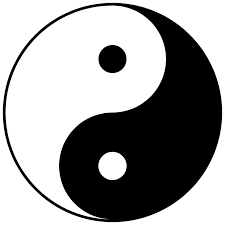
Yin and Yang energy
Life is made up of yin and yang. Yang is a dynamic energy, of doing and activities. Yang energy cannot exist without yin energy. Yin stands for relaxation and softness. Yin energy is greatly needed if you have lived in the yang energy for too much or too long. Yin is about reflection, seeking silence and meditation. Coming home to yourself. If you build in space for yourself, there is a good chance that you will come to new insights. Research what makes you relax: listening to calm music, walking in nature, visiting a sauna, reading a book… You probably know what helps you to recharge.
Yin and Yang Symbol
The many benefits of rest
As I wrote before: rest gives new ideas. And these new ideas ensure that you can take steps again. And there’s more: sleep and relaxation allow your body cells to renew and process the events of the day. They are hugely important. So prioritize at least 7 hours of sleep per night. Your cells renew during sleep, which has a positive effect on your body and mind. Enough reasons to give yourself some rest. It is essential to be the best version of yourself. Not only do you benefit from this, but also your environment.
Be inspired by the jaguar
We can learn a lot from nature, from the animal kingdom. Take a jaguar. This animal can easily reach 80 kilometers per hour when running. It naturally has a good balance of activity and rest. The jaguar lives instinctively and does not think about tomorrow or next week. He takes rest when needed. This is how he charges himself for the moment he wants to catch his prey. After hunting, the jaguar takes time to eat its meal. Then he rests and can digest the meal well. He then charges for the next hunt. We as humans can learn a lot from this. We also need this charging time. After we are recharged, we can resume activities with new and fresh energy.
Learn and be inspired by the jaguar
Long live slowing down!
It’s not easy to sit still. Sometimes it is even very hard work to stand still. We are faced with a little voice in our head that tells us to be productive and keep going. Because that’s how we are programmed. In our society it is all about economic growth and we are focused on matter. Still, it’s more than worth the effort to ‘slow down’. Start today.
When automating your marketing, we often assume that you will scale up the capacity of the marketing team. That can indeed be an advantage, but you should see automated marketing primarily as a tool to make the customer experience (even) better. It can be a tool that works day and night for you to strengthen your brand and organization by responding to the wishes of your customers. In this article, I’ll share 5 tips on how to best make the move from manual to automated marketing.
What is automating your marketing?
Automated marketing is one way to help you offer your customers and prospects a personalized journey through your sales funnel . The functionality is often offered by email marketing providers, but it can also include communication via SMS, social media or the internet.
In other words, automated marketing can consist of a focused series of 2 to 3 emails, with targeted content for a small audience. But it can also encompass a complex network of both internal and external actions. Don’t let that overwhelm you though – a simple structure can make all the difference and deliver great results.
Automated workflows are the common thread
Automating your marketing is essentially nothing more than a follow-up of triggers and actions. It’s a way to make a distinction in your audience and put them on different paths to their experience personalized . In addition, you can also make your internal workflows more efficient in one fell swoop. A few examples:
Triggers – Something happens, or a condition is met
Someone signs up for a newsletter
A customer downloads a catalog
A lead is marked as qualified by marketing
The support department closes a support request
A recipient opened the welcome email, but did not confirm it
Actions – What happens as a result of the trigger
A new subscriber receives a welcome message
Sales get an email about the warm lead
The customer receives an email asking how their support was
There are many more examples, but hopefully these will give you an idea. As you may notice, automation isn’t purely for customer interaction. It is precisely the connection between different departments where the real added value can be achieved.
The Five Foundations of Automated Marketing Workflows
1. Start inventorying customer contacts
As always with trendy technologies you have to start with the main question. Far too often we allow our strategy to be determined by features and capabilities, rather than looking from the customer’s perspective. If you’re starting out with automated marketing, I recommend starting with an inventory of the customer contacts you can point to right now.
Don’t just focus on external communication. By including internal processes before and after the interaction with the customer, you lay the foundation for effective automation strategies.
2. Qualify your content
Marketing is great, but if your setup doesn’t include quality content, you’re not going to get anywhere. Whether it is automated or not. Categorizing your audience based on their previous actions and interactions is a must for setting up an automated workflow. Of course it’s hard to know exactly what material in a group will spark genuine interest, but hopefully you know enough to come up with a theory. After that, as always in the world of digital marketing, all you have to do is test it.
3. Start small
The idea of automation in itself can feel like an easy solution. The more of your workflows you can automate, the more time you save, right? Wrong. As mentioned at the beginning of this article, automation with the goal of reducing the time you spend on certain tasks is a short-term strategy at best.
Instead, try to think of some of your customer touch points that could benefit from the trigger-action logic to improve the experience. Starting small gives you the opportunity to continue to evaluate and build from there.
4. Don’t Make Your Automated Campaigns Look Automated
With personalization you can distinguish your marketing activities from the standard information flow. This cannot be emphasized enough, especially now that more and more interactions with customers are being automated.
Customers should still feel that they are interacting with people and not with a robot. Otherwise, your campaigns will end up in the trash unread, damaging your brand. Every interaction in an automated workflow must therefore be well-considered.
5. Integrate your automated workflows with your customer data
To successfully categorize your audience and track where they are in the process, you need to integrate your automation assets with your customer data. If you try to use two or more datasets from different sources separately, for example your sales process and your email marketing, you lose control in no time.
Fortunately, many CRM solutions offer some form of automated marketing, or at least an integration with a third party that does that. Put in some effort and research your options before investing your time in building an automated flow.
Automation of your marketing is powerful
Marketing automation is a powerful tool to increase business, increase engagement and increase your sales. However, don’t think of it as the off-the-shelf solution. Start on a small scale with a focus on your customer’s experience. And don’t just look at external communication when you investigate where automation can be achieved.
Then you find out through trial and error what really works for you. Fortunately, the technical part of automating your marketing is easier than ever. Intuitive environments and visual steps ensure that anyone can become an automated marketing programmer in no time.
Of course you want to develop yourself, but where do you start? Knowing yourself is a great start to the new year. These simple 25 questions can help you on your way.
Doubts about your job, your relationship, yourself? Sit down with these 25 questions and explore what’s behind the person you think you are. The better you know that, the easier it will be to make choices – and the happier you will be.
What does your ideal day look like?
Do you know what you do very well in your job? And what are your weaknesses?
Who inspires you? What qualities does that person have?
What’s the best way to relax?
Look around you all day long, what makes you happy?
When was the last time you dropped out somewhere? What was the reason? Do you have that more often?
Which compliments make your eyes shine?
Who are you jealous of? What does that person have that you don’t (yet) have? Jealousy is a pointer to hidden desires.
What are you afraid of?
What are you most proud of?
Suppose you win the State Lottery. What are you going to do? (after buying a house and a new car, traveling and giving away a lot of money?) And what’s stopping you from making that dream a reality now?
What makes you angry? Sad? Frustrated? So what do you actually need? Emotions also tell you what is important to you and who you are – deep inside.
What gives you energy?
Suppose your life ends today. Of all the things you didn’t do, what would you most regret?
So far, have you mainly made choices from your head or from your heart?
What characteristic of yourself do you run into over and over again? What is your pitfall?
Which parts of yourself (traits/characteristics) do you prefer to hide away? What positive qualities could be behind it?
What is your first memory of when you were happy?
How do you come across to other people? Does that match how you see yourself?
In which situation(s) do you experience tension or problems? Which limiting beliefs about yourself play a role in this?
What behavior was often ‘punished’ when you were a child (eg in class, or in your family)? What talent is hidden behind that?
What were the three happiest moments in your working life? And private?
What advice would you give to yourself at the age of five? eighteenth? twenty-fifth? Now?
Until now, have you been more like someone who happens to life or someone who designs life itself?
How would you like to be remembered at your funeral?
Why would you ask yourself these questions?
Self-knowledge makes your life more fun and easier. Logical, because in your work, in love, in friendships and everything else that concerns you, you yourself are the constant – and therefore the key to success. Coaches often see people who get stuck, don’t know what they want, are not happy in their relationship or work. The reason is often a lack of self-knowledge.
Many people operate on autopilot. They have learned certain behaviors and traits because they were once expected of them, but they hardly know what their deeper motivations and innate talents are. That also makes it difficult to determine your course. By asking yourself – preferably with a coach or therapist as a mirror – questions about what you naturally do well, what is important to you and what limiting thoughts or emotions you have, you come closer to yourself, and you automatically see which choices suit you.
This gives peace of mind and self-confidence, so that you increasingly do what feels good and not what other people find important. That is not selfish, on the contrary: if you are happy with what you do and do what suits you, others will feel it. It inspires.
Do you want to get to know yourself even better? Make a DEEP dive into yourself and be open minded to yourself.
THERE IS MAGIC IN ASKING YOURSELF THE RIGHT QUESTIONS !!!