Danny Jibodh is the MainBrain and founder of BLOGZYNERGY.COM. As a multi topic professional blogger, he is keeping his eyes 24/7 on different burning topics as they unfold on the internet. With this concept he and his team are providing people like you with tons of different useful sunrise data to update your brain.
Let us imagine a new world together. A world in which economic growth is no longer a fetish, but concern for people and the planet is paramount. A world in which the economy is embedded in a society, and not the other way around. A world in which people are more than just means. A world in which paid work, family life and personal development can thrive harmoniously.
We want to imagine such a world. Now more than ever. All together, sure we all together.
One is too busy to get bored, while the other
slowly but surely no longer knows what to do with himself. Do you
recognize yourself in the latter? Then this is the time to look at the
deeper layer that lies beneath your boredom. If you get bored you can
easily use that to your advantage, you just have to know how.
Researchers around the world are
trying to figure out exactly what causes boredom, what we can do about it and
whether there is a link between boredom and depression. Lead researcher
and psychology professor James Danckert describes boredom as follows: “We
define boredom as an uncomfortable desire to be busy with something, but fail
to fulfill that desire.” So this definition may well explain why you
might get bored during this corona crisis, since your routine is upset and your
sense of freedom is limited. You are not alone in it, me too and more people
around the globe.
Emotions
Before
we can get deeper into boredom, ask yourself if you are really bored. You
can also confuse boredom with emotions such as fear or fatigue. Try to
identify what you feel to find out.
Change it
In
essence, boredom tries to tell you that you don’t spend your time the way you
actually want it to. It is an important signal that you want to change the
situation. Whenever you get bored, remember that you probably need and can
change something about the situation. What counts is the action you take
after this awareness, which can keep you busy and make you a more creative and
successful person.
BOREDOM – AN EXCELLENT TIME FOR INTROSPECTION.
And we don’t like that very
much, because who knows what deep-seated problems will emerge as soon as we
take the time to get bored.
We don’t like boredom for three
reasons:
First of all, boredom gives us a sense of concern – “something is missing”. We
are so used to being amused by a constant stream of external stimuli that when
they are missing we experience the feeling that something is not right.
In addition, boredom triggers our ‘fear response’ . We find it scary to be
alone with our thoughts, fearing that they would be confrontational. To
keep out the mirror that keeps boredom out, you stay busy – whether it is
really productive or fun .
Finally, boredom forces you to step out of your comfort zone , which feels unnatural. As
soon as you realize that you may have to do a number of things differently ,
in order to feel lively – for example, even after starting to read/write that
book – it is safer to maybe watch some good series after all.
To shake off these feelings
above, you should therefore quickly turn to external stimuli such as Netflix,
your smartphone or another distractor to avoid feeling this boredom
So a luxury problem, boredom. We
have so many options to choose what
we want to spend our attention and time on that we get overwhelmed when we
don’t use it – we get bored .
That’s why you take every opportunity to stay busy. You do
not notice the boredom (and dissatisfaction) and therefore do not have to be
alone with any confrontational thoughts.
So in order to reap the benefits of boredom – an
opportunity for introspection – you should not look for more stimuli and
novelty, but as little as
possible.
WAYS TO GET INVOLVED IN YOUR BOREDOM
So you are not going to build a
vegetable garden. What is it? Absolutely nothing except
a good put to reorganize your thoughts in order.
Meditate regularly – make room for confrontational
thoughts.
Meditation would have been the
last thing on your mind if you wanted to tackle boredom.
Now that you know that boredom
is a mental state , it may make sense that meditation helps
you see boredom differently. It helps you to understand that boredom is
not a threatening thing, and it helps you place those negative and
confrontational thoughts.
Meditating gives you the
opportunity to look at the underlying causes why you avoid rest and are always
busy.
And that doesn’t have to be lengthy sessions – 5 minutes a day is enough to use the unrest that boredom creates as a moment of introspection.
Get creative with your thoughts – let them run
wild.
Instead of looking for external
stimulus, use your boredom to feed your brain with creativity. After all,
as soon as you are bored, your thoughts get the chance to roam freely – allow
it.
So stop entertaining yourself with your smartphone and see where your thoughts are stranded. Write them down, articulate them using ‘free writing’ or capture them in color – in a mind map for example!
Get creative with your thoughts – let them run
wild.
Instead of looking for external
stimulus, use your boredom to feed your brain with creativity. After all,
as soon as you are bored, your thoughts get the chance to roam freely – allow
it.
So stop entertaining yourself with your smartphone and see where your thoughts are stranded. Write them down, articulate them using ‘free writing’ or capture them in color – in a mind map for example!
Who knows what brilliant ideas you come up with during the
CORONA LOCKDOWN!
Let me know in the comments how you solve your boredom things.
Data-driven working: almost every organization is working on it or is thinking about it. But how can you actually deliver on the promise of data-driven work?
The
promises of data-driven work are great. Organizations that make decisions
based on facts and figures as much as possible are able to bridge the gap
between customer needs and activities such as R&D, marketing & sales,
and maintenance like no other.
In
this way, an insight driven business leads to an improved
customer experience, more profitability and / or a better service towards the
citizen. That sounds wonderful on paper. But in practice, many
organizations are now drowning in the abundance of data they collect. How
can you actually use data in such a way that it contributes to your business?
Step 1. Determine the scope
Important
tip for enthusiastic companies and organizations that no longer see the data
forest through the trees: know what you are looking for to start
with. Define for yourself what data-driven working should ultimately
yield. And then look specifically at which data fits that purpose. A
reservoir of data becomes much clearer if you as an organization clearly
determine the scope: what are you really looking for?
Step 2. Take the business as a starting point
Many
organizations that want ‘something’ to work with data-driven take the available
data and the possibilities of new technology as a starting point. They
then invent business applications.
In
order to achieve real added value, the reverse order is better. What
exactly do you want to achieve? What delivers the most business
value? What do your customers want? Then search for the correct
(existing) data. Or invest in technology that provides the right data.
Step 3. Start small
Many
companies and organizations often start with grand vistas and sky-high
ambitions. However, practice soon turns out to be more
difficult. Therefore, keep it small, especially in the beginning. A
small-scale pilot is often a good way to gain knowledge and
experience. From there you can then scale up to the entire organization or
parts thereof.
Step 4. Monitor the data quality
Garbage in is garbage out . To be valuable, data must be complete, accurate and
consistent. Data that is not quite right can lead to less good decisions.
Good
agreements about entering, cleaning and maintaining data are therefore
indispensable. It is often useful to ‘entrust’ one or more people with
monitoring the data quality. It may also be wise to invest in automated
data entry; this reduces the chance of errors compared to manual input.
Step 5. Provide good security
In
a data-driven organization, data is more valuable than ever. All the more
reason to think carefully about how to properly protect this data
capital. This primarily concerns technical measures, such as regular
backups, a good firewall and encryption of data.
But
just as important is attention to employee behavior. After all, people are
often the weakest link in the security chain. Think carefully about who
exactly has access to which information. And invest in safety
awareness; for example through an internal campaign, or by putting the
subject structurally on the agenda of the work meeting.
Step 6. Invest in people
Organizations
that want to work data-driven cannot do without good expertise in this
area. Do not wait too long to recruit data scientists and data analysts
with specialist knowledge in the field of data analysis and access. They
quickly find the right information in a reservoir of data.
Do not forget your sitting staff at the same time. Invest in training in data science, Artificial Intelligence (AI) and data visualization. In this way you ensure that data-driven working starts to live in the entire organization.
Step 7. Don’t forget the corporate culture
Culture eats strategy for breakfast . You can still make such nice plans and invest in IT solutions, if employees are not included in the transition to data-driven work, every innovation is doomed.
Corporate Culture is very important to succeed
As a management, actively demonstrate that you believe in data. And keep communicating structurally about how data can help the organization. This prevents data-driven working from remaining the domain of a data team that is limited in size.
The world after COVID-19 will look very different in the days, months and years that follow one of the greatest crises of our time. In this blog I am going to share predictions about a world after the corona virus. Every facet of our society is currently being affected, such as politics, the economy, business and technology. With all its consequences.
We do not know how long the current restrictions will last, but it is clear that COVID-19 is changing a lot. A lot of organizations around the world are doing research and make their own predictions, what the corona crisis will ultimately mean for government, healthcare, education, retail and the travel and technology industries. There are lots of report already rolling on the internet all written from a future perspective, which looks at the state of affairs in 2025. The changes that are expected will occur in the years after the pandemic.
The world of me and you in 2025 Some predictions are technical, such as body scans of visitors to a building or event, the creation of a ‘Health Security Agency’ and a future virtual workforce. Other predictions are more diverse, such as tackling the costs of aging, creating a more sustainable future and giving up privacy for the common good.
I gathered nine contemplative predictions which you can read about here:
The online Big Bang: The development around user experience will connect seamlessly with collaboration platforms such as Muzzle and Trello . The use of Mixed Reality (MR) can also get a big boost if companies design virtual workplaces like The Wild or hub cultures like Emerald City .
Working from home becomes the norm: Working remotely becomes the norm for most companies instead of the exception. In 2025, houses and apartments will be built or equipped with soundproofing, separate voice-controlled entrances and futuristic glass walls on which we can work.
Fewer business trips: There are a lot fewer business trips, because new technologies bridge the distance. Most business meetings and events are virtual and flight shame has increased significantly.
Health screening is everywhere: just as the TSA was formed in the US after 9/11, a Health Security Agency is being established to ensure that people travel healthily and move with an ‘OK2GO’ scan that is mandatory for everyone.
Gaia and Greta: Greta Thunberg forced the world to look at climate change, and now everyone knows the immediate impact of staying home. For example, fish can be seen in the water in Venice again because gondolas sail less and the amount of smog in China has decreased sharply.
Human in the machine: multi-sensory virtual interaction has grown strongly due to the rise of haptic interfaces, such as gloves and full-body suits (such as Teslasuit or HaptX textiles ). These virtual reality interfaces make it possible for users to feel certain objects in real life. So we will not only be able to see and hear information on request, but also feel it.
The Sacrifice of Privacy: Governments have recognized the long-term consequences of a permanent surveillance infrastructure, and the personal data that flows from it provides a new source of economic prosperity.
Aging costs in a post-corona world: As the world’s population ages, Gerontechnology is emerging as a new area of research. Gerona technology focuses on ensuring good health, social participation and independence of the elderly. This is achieved through research and the development of products and services that improve the quality of life. This reduces the costs of our global healthcare.
A cleaner regime: the fight against viruses is fought differently than before the corona crisis. Companies are introducing a general company hygiene policy and new startups like Blueland and Truman’s have made sustainable hygiene and cleaning sexy.
Both the future of work and the future of Everything that is happening in our society, at the moment Technology is at the heart of the recovery from the crisis, but there will also be unexpected consequences. It remains to be seen how governments, education, business and health care are recovering worldwide to serve a new world order.
Laziness isn’t a natural habit for everyone; some of us have an intense zeal to work ethics, while others feel idle always and find it challenging to overcome laziness. Laziness can be caused by a lack of knowledge of the task at hand, procrastination, feeling too comfortable to have the job done, and lack of motivation to get started.
Whatever the reason might be, if laziness intrudes on your daily work output or makes you unconcerned about your duty, it’s going to cost you a lot. The only solution is learning to overcome laziness so that you can be a better person.
If you’ve finally decided to get rid of laziness, here are eight fantastic ways to begin:
Find Your Motivation.
Lack of motivation is the fundamental cause of laziness. Procrastination sets in when we can’t find a good reason to perform the task at hand, and this, is the reason we need the motivation to be productive in our daily roles.
Making a list of what motivates us is essential to gain extra push when needed. It allows you to see yourself at the end of the finished task and think of the rewards attached, which strikes the mind to get started on the job. It is also crucial to keep the goals in mind, as this is the most efficient motivation.
Create a To-Do List.
Accomplishing tasks one after the other makes a work looks in order and helps you work smoothly. Moreover, having a to-do list helps to work orderly and prevent multitasking. Although some people are skilled in multitasking while others can’t, that is why it is necessary to know what you can handle, your abilities.
Take a step at a time while performing a role; it would prevent being overwhelmed and help overcome laziness.
Make Your Work Environment Interesting.
Your environment and the people around you play a significant role in overcoming laziness. It is of great importance to surround yourself with people you share the same interests within the tasks at hand, as their motivation, creativity, and enthusiasm trigger you to complete your job.
More so, ensure that your space and work area provides you with all the necessary attributes to work well.
Always Look for Positive Examples.
Generally, in life, it is important to have role models and mentors as we look up to them for inspiration. However, to overcome laziness, find successful people and exemplary figures in the same discipline that inspires you. These are people that would put you back on your track anytime you feel lazy and lost.
They are people who push you to continue working no matter the challenges. Finally, surround yourself with great people, who have been in your discipline and have managed to excel in the same course.
The Effects of Not Completing the Task at Hand
It is essential to be aware of the consequences attached to an incomplete task, as it would trigger our minds to get the job started. If there are no positive reasons to get started with a role, then thinking of the negative effect would undoubtedly help get to work.
For instance, if you have a contract to execute, and you simply lack the motivation to begin, think about the consequences. You may get the contract terminated, and you may also miss the chance of getting other deals to execute, these are serious consequences that would trigger the mind to get started with any task at hand.
Set Some Deadlines.
Having a deadline ticking in mind stimulates the body to get to work. It’s not only about setting a deadline for each task you have to be determined to stick to it. Sticking to your deadline makes you alert and aware of the task at hand.
Make New Habits
To overcome laziness by changing position, get a little exercise during recess, sleep a bit to get the brain and body intact. Begin with the most complicated task first and move to another task. Commit yourself to those tasks, and getting the job done will be easier.
Nothing can be done until you do. You can have all the foolproof tips and tricks in the world, but ultimately nothing changes until you do.
Get Some Exercise
The power physical will help you get rid of laziness. If you are chronically lazy, exercising might not be your thing, but you’ll be amazed at how energetic and refreshed you’ll feel after only 30 minutes of exercise.
So pick a favorite sport, it could be running, walking or other cardiovascular exercises and top it with some fresh air to keep you invigorated for the rest of the day.
Look at your very own environment and ask yourself the question why some people can accomplish so much things and other not even one thing. At work at home well it doesn’t really matter, but they are doing it. At the other hand you will surely realize that some people are complaining steady about their work load etc. They are keeping their self, running in circles.
For example take a look at a one parent person, who is working at
different locations to then take care of their children and normal house holding.
Believe me they are able to keep this all together somehow. People like this
are thinking and planning straight forward and they are capable enough to run
their things. Is it that they are doing something or not doing anything. Clear
the answer is both.
These kind of successful persons are in action to get their things done properly. They don’t have time to complain and make excuses or procrastinate.
Let me share some Factors That Kill Productivity
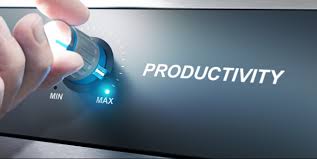
Some people never get their stuff done? Unproductive people I call
them :
They Lack interest or energy.
They suffer from a poor work ethic.
They Lack organization.
They are easily overwhelmed — and panic.
They Start things, but never finish them.
They Procrastinate.
They Spend time worrying rather than working.
They constantly complain.
They are easily distracted.
They Look over their shoulder — and cover their behind.
They Play politics.
They Fight change.
They Resist learning.
They Fear making a mistake.
They fail to make decisions.
They reinvent the wheel.
They Demand perfection of themselves.
They fail to set deadlines.
Here is a listing of Traits/Characteristics of Highly Productive Persons/People:
If you want something done ask a busy person how. These group of
productive people are the following
Ambitious. They Believe there’s no time like the present.
Self-confident. They Are battle-tested. They believe that “If I did
it once, I can do it again.”
Single-minded. They Know what matters most and are relentless in
pursuit of those priorities.
Goal-oriented. They Establish fixed deadlines instead of going
with the flow. They know that Parkinson’s Law holds true — “Work expands so as
to fill the time available for its completion.”
Forward thinking. They Prepare in the morning;
reflect at night.
Focused. They Don’t allow themselves to be disrupted or sidetracked by
others’ priorities.
Trusting. They Do things that matter to them and
find ways to get the rest of it done.
Action-oriented. They Rarely complain. They’re too busy getting
things done.
Positive. They Don’t let obstacles get in their way. When they confront
a barrier, they find a way around it.
Accountable. They Don’t make excuses or cast blame. They know
their mission, accept responsibility, and are determined to get it done.
Modest. They Don’t spend time promoting their accomplishments. They
know that results speak for themselves.
Resourceful. They Make use of dead time rather than letting
valuable minutes fritter away.
Organized. They Rarely waste time reinventing the wheel, repeating
mistakes, or looking for misplaced items.
Project-oriented. They Say “no” to one idea so
they can say “yes” to another.
Decisive. They Make bold decisions. When you do nothing, nothing
happens.
Realistic. They Strive for excellence rather than perfection.
Check for yourself if your habits
are helping or hurting your productivity activities. If so start to change your
inside.
In life you will reach moments of
challenges. You will be confronted with big fear or maybe asked to do things
beyond your limits. As this take place, always remember that getting things
done is as much a mindset as it is. If you start spending time and start
worrying about the future you are stressing yourself out, you are not only
wasting expensive time, you are helping yourself to create a powerful hurricane
in your mind that makes it very tough to succeed. The real fact is, just as a
pep talk inspires you to climb new heights, chronic negativity is taking over
and will drag you down in the valley. Sometime people work very hard to make
their lives even harder.
On the off chance that you need to
complete more stuff, you can! It won’t occur by doing things a similar way.
It’ll require a purposeful exertion to grasp new propensities that push you
forward and to take out conduct that is keeping you down. The truth of the
matter is, the main thing holding you up is yourself. It doesn’t take a mind
specialist to make sense of how to turn out to be increasingly profitable. You
simply need to dedicate yourself to it.
Do You Get More Things Done after reading this. Just let me know! During this CORONA PERIOD you will have to become more productive and think out of the box.
How do you know what the # 1 important thing in your life is?

Easy.
It's 9/10 times that thing that you put off. Sometimes it's as simple as that unopened bank statement you stare at from a corner. It is often that big report that wants to be typed, the deadline of which is slowly approaching. Sometimes it is that first hard step towards your new study or job or maybe a project.

Because it is so important ... it is also terrifying to you. So you don't take action. And deliberately not.

But why?

Often because you run into your fear of the unknown.
Like staring at a misty Mount Everest, without knowing what your first step to the top is.
Or you know EXACTLY what your next step is, but you never decide WHEN to take the step. This keeps everything vague & undefined.

So clear the fog.
It is often simple enough yet difficult.
Well we move on and follow what I illustrate;

Take at least one heavy step every day.
It is super simple.
Nothing new.
Not revolutionary at all.
But it works.
And hardly anyone performs this simple wisdom because your procrastination dominates you.
We continue calmly; You start your day with one important step.
This way you do at least SOMETHING towards a better life every day.

(Because 95% of people feel free to spend a whole week on unnecessary things like checking mail, meeting, and keeping up with social media.) You don't even have to be super effective 50% of your time.
… If you take at least one important step per day.
Direction for any purpose: More peace of mind, more social, more attractive, happier or richer.

Whatever. That's up to you. This principle comes from the book Eat That Frog. If you haven't read it yet, look it up. You can listen to your frog for yourself every day. Your Frog is the annoying frog that you "eat" every morning. That terrible thing that would otherwise put you off for weeks. Until your last-minute stress is so high that you take action.
That could be better. Nothing spectacular. But it gives you peace of mind to do it. While it is so important. And by posting / listening you make it real.

You clear the fog. Good luck eating the frog.

The Regional Blog Authority
We sit too much. Especially now that we stay at home and work from home as much as possible. This can be disastrous for our posture. Sitting a lot quickly results in low back pain. Our backs don’t like it at all if we take the same position for a long time. Do you recognize yourself in this? For a good sitting position, do this quick body check: buttocks, elbow, chin, in, shoulders, knees.
Buttocks Start at your buttocks. Make sure that your buttocks are completely against the back of the chair. Then place a small, firm cushion between the hollow of your back and the backrest. This way you easily maintain the natural shape of your back while sitting.
Elbow Keep your elbows bent at an angle of ninety degrees. This means that your desk should be exactly that height to support your elbows when typing. If your office chair has adjustable armrests, make sure to adjust it to the same height as your desktop or table.
Chin Make sure your chin is parallel to the floor. Complaints such as neck and headaches are often caused by staring at a screen that is set too low or too high for too long. To prevent this, it is best to place your screen in front of you and at a good height.
Then pull your chin in slightly. Many people stick out their chins when they look at a screen. By slightly retracting your chin, you ensure that your chin falls just slightly behind your collarbones.
Shoulders Crooked shoulders are not thanked by your spine. To avoid a crooked posture, gently roll your shoulders down and back. You should feel the muscles in your upper back become active.
Knees Bend your knees ninety degrees, and put your feet on the floor. A good sitting position starts at your feet, make sure they are flat on the floor at all times when sitting.
Have you ever pointed a laser pen on the floor and see how a cat react? How did the kitten react to the laser? Uninterested? No no no. He went crazy. Funny right. Wonderful entertainment. Of course, his brain has not evolved with a love for the laser. He simply recognizes a small prey in the laser. You can keep a cat busy for hours. Cat doesn’t understand that the laser cannot be caught. Cat doesn’t understand how the laser works. Cat does not understand who controls the laser. Then you feel very smart as a person. Crazy cats anyway.
Why am I talking about
this? Read on. . .
You are a cat yourself Yes,
You who is reading this now! And you also automatically rely on certain laser
dots. Empty goals that will never be reached. While you don’t even know WHO
uses the laser in ANY WAY. Who are they?
Snacks like Domino’s and
Milka chocolate. Media such as Facebook and Instagram. Games like Candy Crush
and Call of Duty. Games & Social media have “attention
engineers”. Their full-time job is to keep you distracted for as long as
possible. Do you notice that? Well then you know.
I’m sorry to tell you
this, but you’re their bitch and your attention gets pimped. You have fun for a
while through empty stimuli, then you feel empty.
In that emptiness you need
that pleasure even more. This applies to bad food, gaming, zapping, smoking,
drinking, etc. In this way, the masses live their lives like a laser pen cat.
Blindly chase the empty “laser”.
That’s why people invest
their time in Candy Crush, Instagram & YouTube. And they invest their money
in snacks, butts, coffee, games and Netflix. Until the laser goes out and you
discover that you are chasing an illusion. Something that makes you IMPOSSIBLY
happy.
Are you ready for a real change? Then it is time to grow up and teach yourself much better things. Develop yourself and switch into God Mode So that you will lead a life that DOES fall within your control. Now that you actually know it, try putting yourself in GOD Mode and throw that bullshit off. Build powerful goals for more living pleasure and progress. So that you will lead a life within your control. It’s just a life trigger I want to give you.