CORONA: It is probably going to be very bad

Facebooktwitterredditpinterestlinkedinmail

Not because the virus is a major health threat. (‘Corona’ is only a name for a fairly normal seasonal flu), but because the hype is used to cause an unprecedented global (economic) crisis.

And that crisis will be used to justify measures that would not be accepted without this “force majeure” situation.

In reality, it is not a pandemic, but a worldwide seizure of power.

Getting carried away in this hype is much more dangerous than the virus.

WHAT is at stake?

The main policy goals of recent years:

– Banning cash

– Obligation of vaccinations

– Phasing out financial and medical support for the elderly (read: non-profitable)

– Increasing the burden, and thus poverty.

– Limiting freedoms

This ‘coronavirus’ makes it all possible in one fell swoop. It must therefore be called for the policymakers….

But apparently many people find the virus (which so far only produces a fraction of the victims of normal flu) more threatening than….

– The loss of FREEDOM (see Italy)

– The loss of PROSPERITY (due to the crisis almost everyone will lose their income)

– The loss of PEACE (there will be riots to send police and army to)

– AND the loss of HEALTH (if the economy goes down, the food supply will stagnate, and starvation is not good for health)

Anyone who does not realize that the draconian measures IRREVISIBLY lead to an unprecedented crisis (and all the above consequences) really does NOT understand how the world functions.

DON’T GIVE UP !! SPRAY, PAY & PRAY !

Facebooktwitterredditpinterestlinkedinmail

Seven Tips For Inner Peace

Facebooktwitterredditpinterestlinkedinmail

You will not find inner peace in the offer at Albert Heijn. It is not something that just comes your way, it is something you have to work on yourself.

Are you constantly restless? Have you had enough of that turmoil in your head and in your life? You cannot download inner peace for a moment, but everyone – without exception – can find inner peace if you want it enough.

If your inner peace is important enough, then you put many things aside to experience and enjoy that peace.

Personally, I find inner peace the most important thing in my life. Everything will be fine with inner peace. Almost nothing makes sense without inner peace!

I only found it when I was in my mid thirties.

Only then did I realize: “Ah, this is what I was always looking for!”

Inner peace begins with insight into yourself and what you really want in your life.

In this article you will find SEVEN tips for more peace in your life.

What is inner peace?

Inner peace is the feeling of calmness in yourself. It is the feeling that you are at peace with who you are and what you do.

They call it comfortable in your skin down , calm radiate or live from your heart . You usually see who has it and who doesn’t. Inner peace is – in my opinion – the ultimate goal of everyone. We all look for it in our own way.

Here are some tips to get you started:

1. Accept yourself.

More peace in your life starts with inner peace. The core of inner peace is self-acceptance.

Why?

Because the biggest fight in our lives is the fight against ourselves.

We believe that we must be perfect and make the most of our efforts. Unfortunately, life doesn’t work that way. So there is a big difference between our ideal image and how we really are. That struggle creates unrest.

How can you be calm when fighting yourself? You can’t do that.

Some people think that the solution lies in doing your best even harder . Just reprogram yourself, switch on the turbo and tjakka: You will solve another human problem! But that is only short-lived.

In the end there is only one solution – have peace with who you are.

No inner peace without self-acceptance.

2. Let go of your past.

Much unrest is caused by two thoughts about the past: “That should never have happened” and “I should have done it differently .”

Do you want to drive yourself crazy? Then go over and worry about that!

Do you want inner peace? Then realize that those thoughts don’t give you anything. It happened and you did it that way. That is it and not different.

You do not get inner peace by denying reality. You actually get inner peace in your life through acceptance of reality.

I myself am very bad at worrying about the past. As soon as I start, I immediately think: “That has happened and I can never change.” Then all the stories about what things should have been like, and that also stops the stress.

Because most of the stress comes from the stories we tell ourselves …

3. Postpone the future.

The future is uncertain: “What will happen? How would I respond? What if this happens to me? How do I deal with that? “

How can you stay calm if you try to control something that hasn’t happened at all?

As if you could make a monkey on Borneo dance the lambada next Thursday by thinking very hard NOW – exactly the same! You just can’t do that …

Tiring isn’t it? Thinking about the future always makes you restless, because it is just as elusive as the average monkey.

My suggestion: postpone the future until it actually happens.

And if you are on Borneo next Thursday and happen to meet a monkey who also wants to learn the lambada – well, then it’s your moment!

4. Relate your thoughts.

The more seriously you take all your thoughts, the more unrest you experience. Our thoughts are often critical, negative and worrying.

We fantasize about it and then think it’s the truth.

If you believe everything you think, you are lost. Only when you examine your thoughts – are they actually correct? – find your way back again.

The better you learn to distinguish fantasy from reality, the more you experience inner peace.

For example, I fantasize that everyone thinks this article is great , that I win a prize with it and that I am named Coach of the Year! But don’t I take myself (and my thoughts) too seriously? Fortunately I don’t believe everything I think …

5. Follow your own way.

Nothing creates more resistance than doing things that don’t suit you.

In essence you have two choices: whether you do what you want – or you do n’t do it . Either you do what you want – or you do what your others want. More inner peace in your life is always an extension of your own path .

Only your own vision, your own way, your own choices gives you the peace that you are looking for so hard.

The realization that you do what suits you is so valuable!

It is not for sale, nor can anyone ever give it to you. It is the decision to make that you feel comfortable with.

Every other choice gives you inner resistance. If your feeling says, “I want something else,” that’s exactly what you have to do! Only then do you listen to your feelings and only then do you get peace …

6. Make space in your life.

It’s hard to have room in your head when the rest of your life is packed: If you run from appointment to appointment, if your house is one big mess, if your ambition is greater than your daily list of tasks.

Make space in your life in all these areas and you automatically get more peace in your head.

Wanting to do everything is a scenario for frustration. Everyone wants to plea, want to appear everywhere, always want to be reachable: it is not going to bring you peace.

Say no more often to things that cause unrest. Hey, you can always say yes later, but usually the other way around! Better to do a few things well than half everything. Time management does not give you rest, but your limits indicate it.

7. Have preferences, but no requirements.

Read the following two wishes:

The first is: “I want a great relationship that makes me feel good.”

The second is: “I want a relationship with a woman between 31 and 32, with dark red hair. She has to be able to cook Caribbean, just like I love cross-country travel, scrabble well, weigh up to 74 kilos, work in maternity care and live in a nice location. ”

Who do you think finds what he is looking for earlier?

Claiming something is also a recipe for frustration, because sometimes life does not give us what we want. You get more peace in your life by fighting less against life …

Sometimes life gives us what we need , sometimes what we don’t want , sometimes what we have never thought of .

But it rarely gives us what we demand …

Lower your expectations and be thankful for everything that comes your way. You can learn something from every situation. The less you demand how things should be, the more you accept how they really are.

Facebooktwitterredditpinterestlinkedinmail

URGENT FOOD FOR THOUGHT

Facebooktwitterredditpinterestlinkedinmail

The era we are in now, the negative is much more prominent than the positive. You see that many people experience stress and suffer from all kind of illness [high blood pressure etc]. While our access to food is better than ever and we have so many possibilities, the well-being of our spiritual state is diminishing. How did that happen? Because we always long for more. More happiness, more prosperity. Is that really necessary? And who says that?…Now we have the COVID-19 between us…Think about the above and make it a positive minded discussion.

Image result for positive minded

TOGETHER WE KAN MEAN MORE TO EACH OTHER

The Caribbean Blog Authority

Facebooktwitterredditpinterestlinkedinmail

Eat Yourself A Good Memory

Facebooktwitterredditpinterestlinkedinmail

Nutrition can help maintain your brain. For example, certain foods contribute to a good memory, but you can leave other things in a better position if you want a sharp and vital brain.

Eat this

– Omega 3 fatty acids can inhibit mental decline. These fats are mainly found in wild fatty fish, such as herring, mackerel, salmon and sardines.
– Antioxidants are also good for our brains. These substances are in dark chocolate, coffee and tea.
– Anthocyanins, the dyes that occur in the peel of (red) berries, protect the brain against harmful influences. Blueberries also contain this color.
– Turmeric, also known as turmeric, can protect the brain against Alzheimer’s.
– An organic egg also belongs to good nutrition for the brain. This is due to the substances choline, lutein and omega 3.
– Walnuts, cashews, Brazil nuts and almonds are good for the brain.
– Drinking water. Hydration contributes to optimal mental abilities.

Better leave this alone

– Sugar is the number one priority. If you eat too much of this, research can lead to a high inflammatory value of the hippocampus. Damage to this is related to memory problems. It is also better to skip drinks that contain a lot of sugar, this was scientifically associated with the development of Alzheimer’s.
– Avoid trans fats. These are often found in products that contain ‘partially cured vegetable fat’.
– You can also leave your favorite alcoholic drink for what it is. Alcohol has been shown to shrink the brain.
– Avoid ingesting heavy metals such as mercury. This includes fish such as tuna, swordfish and shark.

Facebooktwitterredditpinterestlinkedinmail

Research shows: art of movement against low back pain

Facebooktwitterredditpinterestlinkedinmail
Image result for tai chi

Low back pain is a common ailment, but could be remedied by practicing various movement arts. Researchers at Atlantic University Florida found that if we use our body and mind at the same time, back pain can be reduced.

During the study, the effect of three so-called mind-body exercises was examined. This included yoga, tai chi (a Chinese art of movement with moderately intensive movements and mindfulness) and qi gong (a Chinese meditative therapy that makes us more aware of the body through repetitive movements).

Effects

The researchers noted that exercises from the various movement arts could reduce symptoms such as low back pain. And not only that: the mobility of the body also increased and it had a positive effect on depression and anxiety.

Strong mind

According to the researchers, the three movement arts not only strengthened the body, but also the mind. This is a hopeful conclusion for people with chronic back pain, since they often suffer from poor mental health along with their back problems.

Facebooktwitterredditpinterestlinkedinmail

Best Case Scenario Climate 2050

Facebooktwitterredditpinterestlinkedinmail
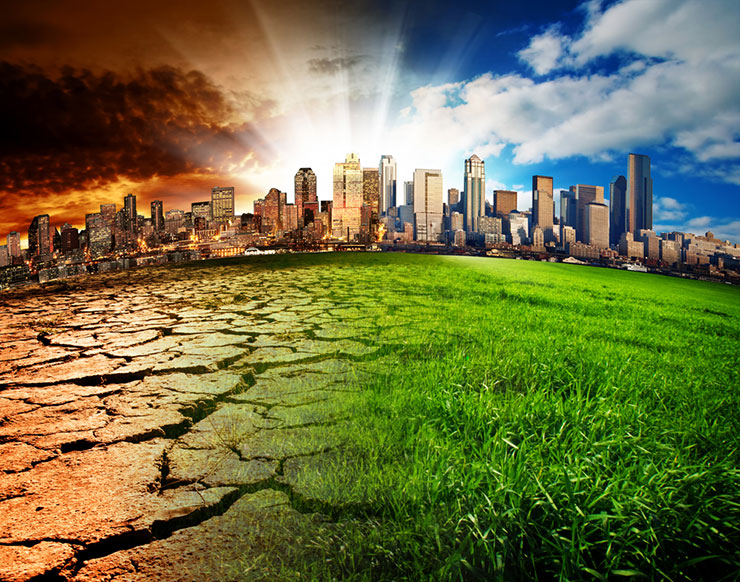
Image result for climate

Two founders of the Paris Climate Agreement and chief UN negotiators, Christiana Figueres and Tom Rivett-Carnac, released the book The Future We Choose on 25 February 2020. In it they outline, among other things, a scenario of a future world that they believe we should create. The translation of the book appeared on February 27: We determine the future. Team Blogzynergy shares some passages from this ‘best case scenario’ for the climate in 2050.

The world we have to create

It is 2050. We have managed to halve emissions every decade since 2020. We are on our way to a world that will be no more than 1.5 degrees Celsius warmer in 2100.

In most places in the world the air is humid and fresh, even in cities. It looks like you are walking in a forest and you probably do that too. The air is cleaner than it has been since the industrial revolution. For that you have to thank the trees. They are everywhere.

Afforestation was not the only solution, but the trees gave us the time we needed to overcome carbon emissions. Donations from companies and individuals provided funding for the largest tree planting campaign ever. When we started, it was purely practical, a tactic to combat climate change by moving the carbon: the trees removed the carbon dioxide from the air, separated oxygen and returned the carbon where it belongs: into the ground. Of course this helps to reduce climate change, but there were more benefits. At every sensory level, the feeling of living on what has again become a green planet has changed completely, especially in cities. Cities have never been so good to live in. With more trees and much fewer cars, it has proved possible to make entire streets suitable for urban agriculture and playgrounds for children. Every empty spot and every dark, dead-end alley has been given a new purpose and is now planted with a shady grove. A vegetable or flower garden has been installed on every roof. Blind walls that were once filled with graffiti are now covered with green climbing plants.

For the developed countries, the general change that required a shift to renewable energy was sometimes an uncomfortable transition, as old infrastructure often had to be adjusted and old things had to be done in new ways. But for the developing countries it marked the beginning of a new era. The majority of the infrastructure needed for economic growth and poverty reduction was built according to the new standards: low carbon emissions and a high capacity for recovery. In remote areas, the billion people who did not have electricity at the start of the 21st century now get energy from the solar collectors on their own roof or from jointly managed wind turbines. This new access opened the door for so much more. Large population groups have made a leap towards improved sanitation, education and health care. People who only had trouble getting clean water can now provide the entire family with it. Children can also learn in the evening. Hospitals can now also work efficiently in remote areas.

Construction works all over the world make more of what they need than just electricity. All buildings collect rainwater and manage their own water use. With sustainable electricity sources, local desalination became possible, which means that clean drinking water can now be produced wherever needed in the world. We also use this water for hydroponics (growing plants on water to which nutrients have been added), flushing the toilet and for the shower. We have successfully rebuilt, organized and structured our lives to live more locally. Although energy prices have fallen enormously, we still opt for life and work close to home rather than commuting. Thanks to the better connections, many people now also work at home,

We make communities stronger. As a child you may have seen the neighbors only fleetingly. But to make things cheaper, cleaner and more sustainable, every part of your life is now more locally designed. Things that you did alone are now being carried out jointly – growing vegetables, collecting rainwater, composting. Resources and responsibilities are now shared. At first you resisted this solidarity – you were used to doing things yourself and within the privacy of your own home. But soon the camaraderie and the unexpected new support network started to feel good, something to hold high. For most people, the new way of life has proven to be a better recipe for happiness.

International air traffic has changed completely. Biofuels have replaced kerosene. Communication technology is now so advanced that we can participate in meetings anywhere in the world without having to travel. Civil air traffic still exists, but is used much less and is extremely expensive. Thanks to the fact that a lot of work is becoming more and more decentralized and can be carried out almost anywhere, people save for their ‘big vacation’: international journeys of weeks or months instead of trips of a few days. If you live in Europe and want to visit the United States, you can even plan to stay a few months or longer and view the entire continent using local public transportation with zero emissions.

Although we have successfully reduced carbon dioxide emissions, we are still confronted with the effects of record levels in the atmosphere of the past. The poorly degrading greenhouse gases can go nowhere else than to our already highly polluted atmosphere and they cause increasing extreme weather conditions – albeit less than if we had continued to burn fossil fuels. Glaciers and polar ice are still melting and the sea level keeps rising. Severe droughts and desertification are taking place in areas such as the western United States, the Mediterranean and parts of China. The constant extreme weather and the decline of resources continue to reinforce existing differences in income, health, food security and water availability. But now governments have acknowledged the factors of climate change as the amplifiers of the threat they are. Thanks to that awareness, we are now able to predict problems and to fight them before they end up with humanitarian disasters. So while many people are still in danger every day, the situation is not as dramatic or chaotic as it could have been. The economies in developing countries are strong and surprising global coalitions have formed with a new sense of confidence. If a population needs help right now, there is political will and money available to give that help. Thanks to that awareness, we are now able to predict problems and to fight them before they end up with humanitarian disasters. So while many people are still in danger every day, the situation is not as dramatic or chaotic as it could have been. The economies in developing countries are strong and surprising global coalitions have formed with a new sense of confidence. If a population needs help right now, there is political will and money available to give that help. Thanks to that awareness, we are now able to predict problems and to fight them before they end up with humanitarian disasters. So while many people are still in danger every day, the situation is not as dramatic or chaotic as it could have been. The economies in developing countries are strong and surprising global coalitions have formed with a new sense of confidence. If a population needs help right now, there is political will and money available to give that help.

The refugee situation that has lasted for decades is still a source of disagreement and conflict. But fifteen years ago we stopped calling it a crisis. Countries agreed on guidelines for controlling the influx of refugees – on how to assimilate populations without problems, on how to distribute aid and money, and on how tasks should be distributed within a certain region. The agreements are adhered to most of the time, but occasionally problems arise when a country tends to fascism after a few elections.

The spirit of the times has also changed enormously. How we think about the world is now very different. And unexpectedly how we think about the other person.

When the alarm bells started to ring in 2020, mainly thanks to the youth, we realized that we had gone too far with our consumption, competition and greedy self-interest. Our dedication to those values ​​and our pursuit of profit and status had led us to deal with our environment like a steamroller. As a species, we continued uncontrollably, resulting in the near-demise of our world. We can no longer close our eyes to what is happening on a tangible, geophysical level, if you despise recovery, cooperation and a sense of community: imminent destruction.

To withdraw ourselves from this self-destruction would have been impossible if we had not shifted our mindset and priorities, if we had not realized that doing what is good for humanity goes hand in hand with doing what is good for the earth. The most fundamental change was that we, collectively, as governments, citizens and companies, started to adopt a new adage: “Is it good for humanity?”

Facebooktwitterredditpinterestlinkedinmail

FOOD FOR YOU TO THINK!

Facebooktwitterredditpinterestlinkedinmail
Image result for food for thought

People want a M.B.A. = (Massive Bank Account), However they are clueless on how to create wealth and be R.I.C.H = (Residual Income Compliments Health/Happiness) 😁

It’s because they continuously surround themselves with H.A.T.E.R.S = (Having Anger Towards Everyone Reaching Success) 🤬 and then wonder why they are P.O.O.R = (Passing Over Opportunity Repeatedly) 🤕 and B.R.O.K.E. = (Being Ridiculous Outlawing Knowledge Everyday) 🤦‍♀️

You can’t have a P.R.O.J.E.C.T.S. (People Relying On Just Enough Cash To Survive) type of mindset. You have to be willing to make that C.H.A.N.G.E = (Choosing Happiness And Never Giving Excuses) 🤓 and exercise true F.A.I.T.H (Finding Answers In The Heart) 🤗 along with H.O.P.E (Having Only Positive Expectations) to make that P.U.S.H (Persistent Until Something Happens) 😎

#StayInspired

Facebooktwitterredditpinterestlinkedinmail

NICKERIE CAN GROW INTO A BLUE ZONE REGION IN SURINAME

Facebooktwitterredditpinterestlinkedinmail
  
I recently read that the police have indicated that the Nickerie district in Suriname (South America) has been the safest place to live and work in recent years. It is not unknown that this part of Suriname can also be considered as a direct gate to CARICOM potential. Nickerie is driven by agriculture. From my perspectives and also as a true Nickerian, I would also like to state that Nickerie has the power to transform into the first BLUE ZONE Region of Suriname through good policy. You don't have to agree with me. And of course pessimists will raise all kinds of talks and questions, but unfortunately that won't stop me from continuing with this blog.
A typical Surinamese is raised with negative thinking and to change that is a chore. I will not embroider on this, because I think differently from pessimists.

As an active blogger, I silently follow various trends in the world. This is how the BLUE ZONE caught my attention. After a lot of research and reading, I conclude that the safest district of Suriname has the ingredients to become a blue zone district of Suriname.

Blue Zones are areas in the world where relatively many people in good health live to be one hundred years and older. Sardinia is one of those places. Old age is respected: the elderly are considered full; their wisdom of life is appreciated and they are a full part of family life.

With the safety factor in the bosom, work can continue to ensure that life in Nickerie becomes more pleasant. Health and happiness almost go hand in hand. Growing old healthily has everything to do with daily habits: eating lots of vegetables, walking in nature, gardening, having a chat, taking a nap and drinking a glass of wine. I can already see that this food is for the pessimist, but I am continuing.

Naturally moving as one people

'Blue Zoners' do not go to the gym, but physical exercise is a natural and logical result of the way their life is organized. One hundred year olds in Okinawa sit not on a chair, but on the floor, and dozens of knees a day. The old Sardinians live in houses with stairs. Every visit to the shop, church or friends is the reason for a walk. Little or no use is made of modern conveniences and mechanical aids. When they bake a cake, they mix the batter by hand and not with a mixer. If they do exercise consciously, they do activities that they enjoy; there is much walking and gardening. Do you recognize some simple ingredients in this? I do not reject the use of technology.

 The right perspective

 The Japanese concept of 'ikigai' is becoming increasingly popular in various countries. Ikigai indicates that you have a purpose in your life, a reason to get out of bed every morning. Living according to the ikigai principle provides such a goal seven extra years of life. This sense of purpose is clearly present at the Blue Zoners. 

On the other hand, they also know when to switch back. Their daily life provides moments of peace and relaxation, for example a siesta, a party or a moment to pray. See again some simple ingredients to build on. And even more they cost nothing. Healthy food What the elderly people in the Blue Zones have in common is that they eat mainly vegetable. Beans are regularly on the menu; meat only a few times a month. 

In Okinawa, for example, the hara hachi bu rule is used: do not eat until you are saturated, but stop when you are eighty percent full. The Blue Zoners drink an average of one or two glasses of wine a day. For me, water is already a perfect product.

 The social life in the Blue Zones is important. Family comes first. The elderly are part of the family and often live with their children at home or in the neighborhood. Residents of the Blue Zones have a strong social network. For example, the people of Okinawa unite in 'moais'. These are groups of five people who commit themselves to life and support each other or confront each other about unhealthy or undesirable behavior. Faith also plays a role in the Blue Zones. Blue Zones of happiness Following on from the Blue Zones with the longest life expectancy, it is important to delve into what I call the Blue Zones of happiness: where in the world are people happiest and why? 

Research that has been done, for example, stopped at Singapore, Costa Rica and Denmark. Singapore, the happiest country in Asia, embodies the kind of happiness that comes from satisfaction and satisfaction. In general, people like a clear and easy way to success and don't mind working hard. They prefer security over freedom. 

In Costa Rica, people give priority to social interaction; they will not work overtime quickly if they miss a party. They also give family priority - the whole family has lunch on Sunday afternoons. They are religious and research shows that religious or spiritual people are happier. 

In Denmark people live with more purpose in their lives than anywhere else. Their health care, social security and education are covered. Almost all of their daily needs are met, allowing people to choose work they love. It is noted that where gender equality exists, both men and women are happier across the board. 

Other lessons that we can further learn from the happiest cities and places in the world: residents of cities where you can walk and cycle, with parks and greenery are generally happier than residents of cities without those amenities. 

The dietary pattern also plays a role: reducing the consumption of fast and junk foods and making fruit and vegetables cheaper and more available makes for happier and healthier residents. 

I hope that with this approach I have given policymakers and in particular the people of Nickerie an eye-opener to become healthier and more prosperous and that this may even spread to the rest of the Caribbean. 

We focus an estimated 30 times a day on the negative. Yet it pays to work consciously on a positive attitude to life. This not only ensures a happier feeling, it also contributes to a good brain function. 

As a life traveler you must always be optimistic. 
Off to the blue zone ...

THE CARIBBEAN BLOG AUTHORITY
 

Facebooktwitterredditpinterestlinkedinmail

This is how you deal with situations in which you seem to have no influence

Facebooktwitterredditpinterestlinkedinmail

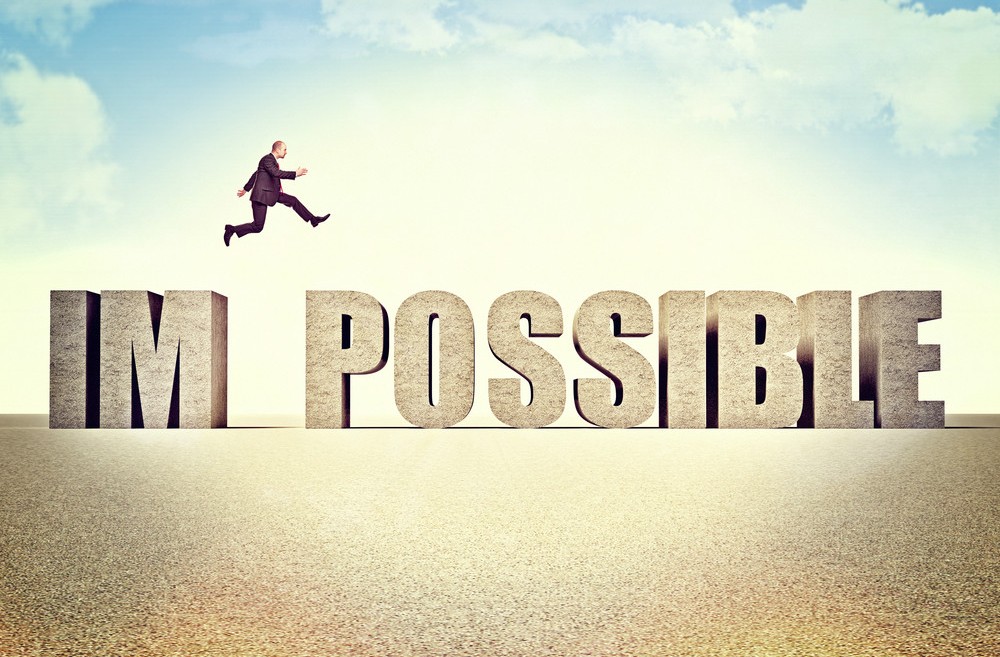
Image result for impossible possible

Colleagues who are always late, decisions taken from above: we all have to deal with circumstances at work that we seem to have no influence on. Please as a blogger allow me to explain how to handle this properly. You can do it your way as well.

There is a saying: Change what you cannot accept and accept what you cannot change . That all sounds great, but how do you do that now, accept something that you cannot change? If we could do this easily, we would have done it for a long time.

Management assistants in particular often feel very involved in their work. As a result, they have difficulty accepting circumstances beyond their control. Involvement is a personal value, but it can also be a core value, and therefore comes from within.

We also have a heart for the business. If, for example, we see that certain things are happening that are detrimental to the clients or the quality of our work and we have no influence on this, then it is difficult to accept this.

Involvement is therefore a beautiful characteristic, but it is precisely because of this characteristic that we have extra difficulty dealing with circumstances at work that we have no influence on.

Yet there is a way in which we can deal with such circumstances at work.

Focus on what is possible

Take a look at what is possible and therefore on which part of the circumstance we do have influence. On which part or parts of the problem, the situation or the circumstance do we have any influence? Whatever the circumstances are, there is almost always something that we do have influence on.

Let me give an example. Suppose there is a threat of dismissal for you. Whether or not we ultimately get fired, we have no influence on that. But what we do influence is the execution of our work. If we do that well, the chance is always slightly greater that we can stay than if we throw the cap at it. But also by requesting a meeting with our supervisor and indicating that we are prepared to follow courses or training, or that we are open to any other position. At the same time, we can look around for another job in the meantime.

By focusing on what we do influence, we opt for proactive action instead of reactive action. As a result, we no longer feel like a victim, because we take control and responsibility for what we do have influence on.

Start the conversation

But what about the behavior of, for example, a colleague? Suppose a colleague arrives late for work every morning. Whether this colleague arrives at work on time or not, we have no influence on that. However, what we can do is start a conversation about this. Then we can first state what the facts are, namely that we have noticed that he / she regularly comes late in the morning. We can then indicate that we are affected by this and ask how we can deal with this in the future.

By starting a conversation, we regain control and act proactively. If we really listen to this colleague, it may just be that we are told what the reason is for being late. Then we can talk about possible solutions, such as other working hours. If we then work this out together, this can be presented to our supervisor. By speaking out and entering into a conversation, we do have an influence on the behavior of others.

Decisions from above

But what if it concerns something definitive, such as a decision that has already been taken by higher authorities? Even then we can always enter into a conversation with the relevant people. In this case, therefore, with the management or the board. Then we can indicate that we think it is a shame that these decisions were taken from above, without being involved in this. That we also have ideas about this and that we think it is a shame that this has not been requested, and that these ideas could therefore not be included in the decision-making process.

That does not mean that something will actually be done with it, but we have at least given our opinion on this. We always have an influence on what we say and against whom. So also in this case we take control and act proactively by speaking.

Just think of the consequences if we don’t do this. Suppose we act and think reactively: the decision has already been made. What if we do not speak out against the right people? There is a good chance that we will then express our dissatisfaction with the wrong people. Because if we have something high, we still want to get rid of it. Then we can speak better to the right people, even though this is the top of the organization, for example.

Let go in mini steps

If we have done everything about the things that we can influence, how do we let go of the things that we really have no influence on?

By constantly looking at how we can let go of something 1 percent. By looking at what we need to be able to let go of this a little bit. A mini step. What we focus our attention on is growing. If we focus on how we can let go of something a little, it will become easier and easier for us.

Finally the following. It is not what we want to hear, but often we can learn from circumstances that are not going well. Just think of previous experiences in your life that you have not experienced as pleasant. You have probably learned a lot from this. As a result, we often know what we no longer want.

If every day or moment you are able to reflect in your very own surroundings you can learn a lot more.Not difficult right.

Facebooktwitterredditpinterestlinkedinmail

5 proven reasons why investing in external presentation pays off

Facebooktwitterredditpinterestlinkedinmail
Image result for style dressing for men and women

Common sense dictates it already, but research also shows: being well dressed influences your professional success in all sorts of ways. Let me please give examples .

Are you aware of clothing? Or do you put on an outfit for work that is especially practical and comfortable? Because yes, I hear you say: “Isn’t it about my qualities and what I can do? Isn’t success in clothing? Isn’t clothing a matter of taste? “

Your qualities are of course important. Being good in your profession is a precondition for being successful. And of course taste and personal preferences play a role in your clothing choice. But also know that with clothing and color you express how you want to look and what you want to radiate.

Clothing tells a story and is therefore an important and powerful means of communication in the business context. In this article I will discuss five reasons why it is important to pay attention to your appearance.

1. The visual image helps to make a good first impression

In many situations, but certainly in the business working environment, making a good first impression is important. Much has been written about the first impression and how it comes about. An often cited study is that of the American scientist Albert Mehrabian. According to the professor of psychology, communication takes place for the most part through body language (visual, 55 percent) and voice (vocal, 38 percent), and only 7 percent through what someone says (verbally).

In other words: the visual image and the tone of your voice have more impact on how you are perceived than what you say. Your external presentation, your packaging, is therefore an important part for the first impression. Make use of this, because clothing and accessories are things that you can influence yourself.

The first impression is also very important for the impressions that follow. If the first impression is positive, other positive traits are automatically attributed to a person. For that reason it is important to reflect on how you come across to others and how to deal with this consciously. Clothing is one of the tools that you can use for this.

2. Well dressed enhances your credibility

You may have already experienced that you are approached differently if you are dressed in a nice business dress than if you are wearing jeans with worn-out sneakers. There is connection , various research results on this connection between well-dressed and being taken seriously are included. For example, it has become apparent that managers are more likely to take advice from consultants who are dressed in expensive suits. An expensive suit is a symbol of higher social status and seniority.

Of course, this does not mean that you will only be seen or heard in luxury, exclusive clothing, but that it is important to dress well and representative (for your position). Paying attention to your outward presentation is always appreciated. If you want to convince someone or believe in you, it helps if you dress appropriately and appropriately. A stylish package sells your content.

3. Well dressed increases your expert status

With clothing you provide information about your status. People perceive you based on what they see, hear and experience. Who are you, what do you want to radiate and what do you show this in your outer presentation? Are you the expert in your field? Are you the management assistant for whom quality and accuracy are of paramount importance? Show this in your appearance and choose clothing that matches this image and your ambition.

4. Attractiveness influences the amount of your salary

That there is a connection between the level of salary and attractiveness, is known to many people. ‘Attractive’ people have higher salaries than ‘less attractive’ people who do the same work (source: Roos Vonk, De first impression ). What is found ‘attractive’ is related to the external characteristics of a person, such as facial characteristics, height, weight and shape of the posture. You have little or no influence on this.

On clothing and external care, however. That this may be relevant, according to an American study conducted by sociologists Jaclyn Wong and Andrew Penner. These researchers emphasize the importance of good external presentation and care, especially for women. Their research showed that it is especially worthwhile for women to invest in appearance. For example, women who pay more attention to their external presentation earn more money, regardless of how attractive they are. This is called the ‘attractiveness bonus’. So take advantage of this. Clothes make the woman, but also her salary.

5. Well dressed increases your confidence

The importance of clothing is of course not only in how you are perceived and how you can influence others with this. Clothing also has an effect on how you feel. Think, for example, of your wedding day when you were dressed in that beautiful dress or the moments when you dress specifically for an important conversation or presentation at work.

When you know that you are well dressed, you feel more confident. This influences your behavior, your performance and thus your (business) success. For example, research has shown that people work more carefully and with more attention when wearing a doctor’s coat. How you look at clothing, the associations you have with it, influence your behavior.

For the new year I want to inspire you to work on your outer presentation. Dressing yourself stylishly and appropriately helps you in your career and in your chances of success. So show your expert status in your professional appearance. This way you get a better view and you are optimally visible.

The Caribbean Blog Authority is wishing you a bling bling 2020.

Facebooktwitterredditpinterestlinkedinmail